
Who are you when leadership gets difficult?
Leadership is often associated with expertise, confidence and decisiveness. Yet some of the most significant leadership challenges have less to do with technical knowledge and more to do with how we respond when conversations become uncomfortable, relationships become strained, or beliefs are challenged.
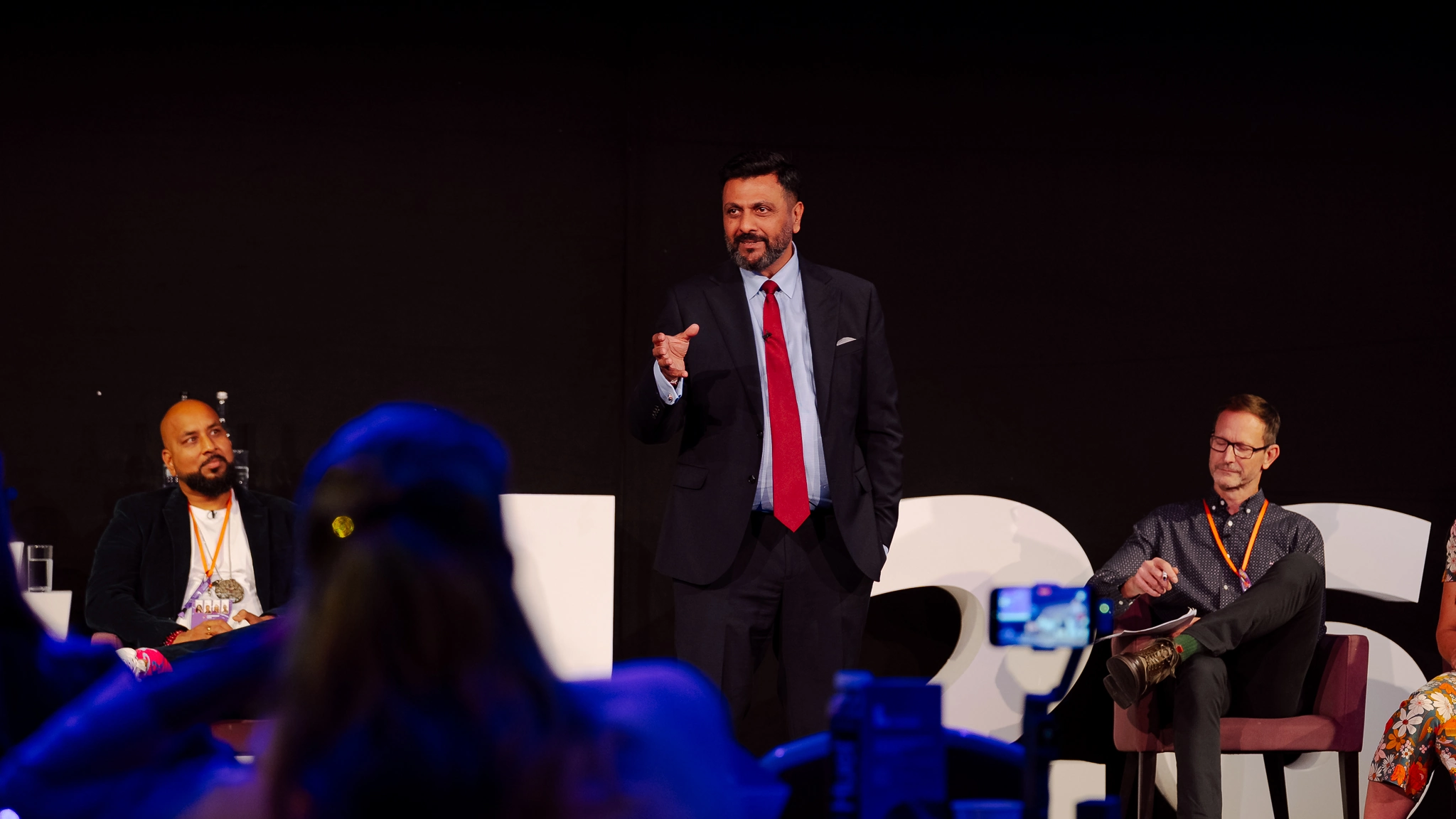
At Leadership Live 2026, leadership consultant and former senior police commander Kul Mahay explored the role emotional intelligence plays in executive decision-making. Drawing on his experience leading in high-pressure environments, he encouraged delegates to look beyond strategy and process and consider a more fundamental question:
Who are you when leadership becomes difficult?
His session resonated strongly with the Institute of Leadership's belief that effective leadership begins with self-awareness. Technical expertise may earn trust and credibility, but leadership effectiveness often depends on our ability to understand ourselves, understand others and respond constructively under pressure.
Leadership is a human endeavour
Many leaders progress through organisations because they are highly capable specialists. They are recognised for their knowledge, judgement and track record of delivering results.
However, leadership introduces a different set of challenges.
The expertise that helps someone excel in a professional role does not automatically prepare them to navigate competing perspectives, organisational politics, ambiguity and complex interpersonal dynamics.
As Kul reflected through examples from his policing career, even leaders who remain calm during major incidents can find workplace conflict, disagreement and difficult stakeholder relationships unexpectedly challenging.
This distinction matters because leadership is never exercised in a vacuum. Decisions, conversations and organisational change are all experienced by people, each bringing their own emotions, assumptions and perspectives into the room.
The question is not whether emotions influence leadership. It is whether leaders recognise their influence and respond thoughtfully.
The unseen dynamics that shape decisions
One of the key themes of the session was that every leadership conversation contains more than the topic listed on the agenda.
Alongside the formal discussion sit less visible influences:
-
Pressure and uncertainty
-
Personal investment in ideas
-
Individual and organisational identities
-
Perceptions of status and authority
-
Previous experiences and relationships
-
Fatigue, stress and competing priorities
These factors can significantly affect how people interpret information, respond to challenge and participate in decision-making.
A proposed change may feel threatening because it calls someone's expertise into question. Resistance may stem from concern rather than opposition. Agreement may reflect exhaustion or resignation rather than genuine support.
From an Institute of Leadership perspective, this reinforces the importance of curiosity. Rather than assuming we fully understand what is driving behaviour, effective leaders seek to understand the context behind it.
Listening beyond the words
A particularly thought-provoking exercise invited delegates to consider common workplace phrases such as:
-
"Just to play devil's advocate..."
-
"Can we take this offline?"
-
"I'm happy to go with the room."
Participants were asked to identify multiple possible meanings behind each statement.
The exercise highlighted an important leadership lesson: words alone rarely tell the whole story.
For example, "Let's take this offline" may be a practical effort to keep a meeting on track. Equally, it may signal discomfort with the direction of the conversation. Similarly, someone who says they are happy to "go with the room" may be expressing alignment, or they may simply feel that continuing to challenge the majority view is pointless.
For leaders, understanding these nuances is essential.
Creating environments where people feel able to contribute openly requires paying attention not only to what is said, but also to what remains unsaid. It requires noticing changes in participation, silence from key stakeholders and signs that consensus may not be as strong as it appears.
Emotional intelligence as a leadership capability
Throughout the session, Kul explored emotional intelligence through four interconnected dimensions:
Self-awareness
Recognising our emotions, assumptions and behavioural patterns, particularly when under pressure.
Self-management
Managing reactions and creating enough space to respond deliberately rather than instinctively.
Social awareness
Understanding the emotions, motivations and dynamics affecting others within a team or organisation.
Relationship management
Building trust, navigating difference constructively and fostering productive collaboration.
These capabilities sit at the heart of modern leadership practice.
Research consistently shows that leadership effectiveness depends not only on intellectual capability but also on interpersonal and emotional competence. Leaders who understand how they affect others are better positioned to build engagement, encourage challenge and support high-performing cultures.
Noticing before deciding
Another powerful message from the session was the importance of observation before action.
When faced with a complex business dilemma, many leaders instinctively focus on finding the right solution. Yet, as delegates discovered through a scenario-based exercise, valuable information often exists beyond the immediate decision itself.
-
Who is contributing to the conversation?
-
Whose voice is absent?
-
What assumptions are being made?
-
How might organisational culture influence people's recommendations?
These questions encourage leaders to look beneath the surface and understand the wider system in which decisions are being made.
This reflects a key principle of responsible leadership: good decisions are rarely the result of speed alone. They emerge from understanding context, perspectives and consequences.
The gap between intention and impact
Perhaps one of the most important insights from Kul's session was the distinction between what leaders intend and what others experience.
Most leaders do not set out to discourage challenge, undermine confidence or create silence in meetings. Yet under pressure, behaviour can have unintended consequences.
A defensive response to feedback may signal that disagreement is unwelcome. Dismissing a concern too quickly may discourage future contributions. A decision communicated without sufficient context may create uncertainty despite positive intentions.
This is why feedback and reflection are so important.
Leadership is not defined solely by how we see ourselves. It is also shaped by how our actions are experienced by others.
For organisations seeking to build psychologically safe cultures, this creates an important responsibility. Leaders must be willing to examine not only their decisions, but also the behaviours that influence how those decisions are received.
Leading with humanity
Kul concluded with three practical prompts:
Notice. Choose. Connect.
-
Notice what is happening within yourself and around you.
-
Choose your response rather than reacting automatically.
-
Connect with others in ways that build trust, understanding and shared purpose.
These principles align closely with the theme of Leadership Live 2026: Leading with Humanity.
The next time a conversation becomes challenging, it may be worth pausing before responding.
Ask yourself:
-
What am I noticing?
-
What choice do I have in this moment?
-
How can I help others contribute their best thinking?
Because some of the most important leadership decisions are not about what we decide. They are about who we choose to be when leadership gets difficult.